Beyond Sewerage: The Critical Role of Fecal Sludge Management (FSM)
For decades, the standard for "developed" sanitation was underground sewerage networks. However, with rapid urbanization and water scarcity, digging up cities to lay pipes is increasingly unfeasible. In India, over 60% of urban households depend on on-site sanitation systems like septic tanks. The solution is not always to replace them, but to manage them effectively through Fecal Sludge Management (FSM).
What is FSM?
FSM deals with the entire value chain of non-sewered sanitation:
- Containment: Safe storage in septic tanks or pits.
- Emptying: Mechanical emptying using vacuum trucks (honey suckers).
- Transport: Safe conveyance to treatment sites.
- Treatment: Processing at Fecal Sludge Treatment Plants (FSTPs) or co-treatment at Sewage Treatment Plants (STPs).
- Reuse/Disposal: converting treated biosolids into manure or energy.
The Case for Non-Sewered Sanitation
Experts like Prof. Srinivas Chary argue that "sewered sanitation for all" is a moving target that developing economies may never hit—nor should they need to.
- Cost-Effective: FSM infrastructure costs a fraction of sewerage networks.
- Water-Smart: Sewerage requires massive amounts of water to transport waste. FSM works with low-water or pour-flush systems.
- Flexible: FSM can be deployed immediately in dense slums or peri-urban areas where laying pipes is impossible.
Innovations in FSM
1. Scheduled Desludging
Instead of waiting for tanks to overflow (emergency emptying), cities like Wai and Sinnar have moved to scheduled desludging—every 3 years. This regulates the flow of sludge to treatment plants and ensures regular maintenance of septic tanks.
2. Co-Treatment
Utilizing existing STPs to treat fecal sludge. By adding a simple receiving station, underutilized STPs can process high-strength sludge from trucks, optimizing infrastructure utilization.
3. Decentralized Units (ReFlow)
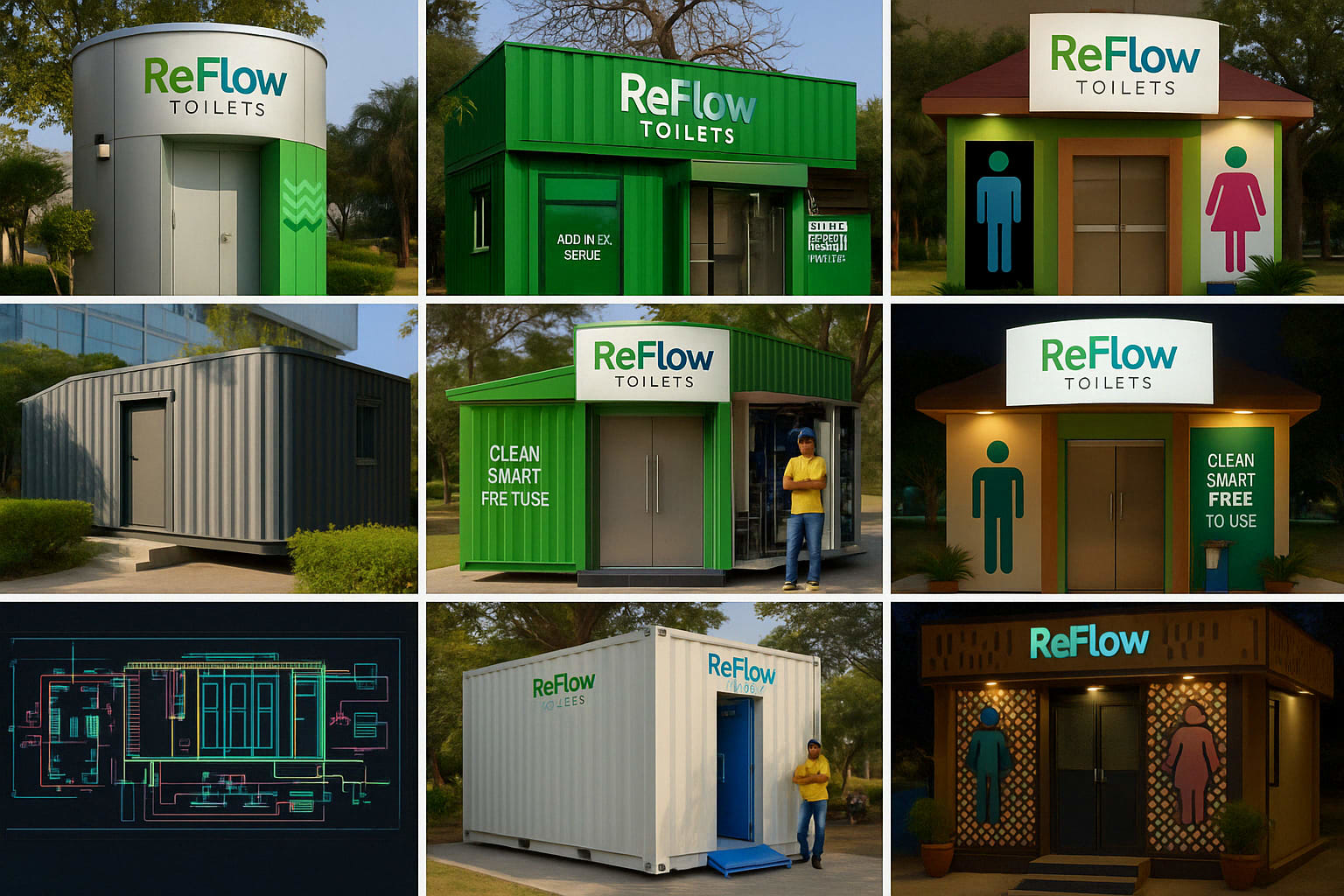
While FSM handles the logistics of sludge, ReFlow's B-CRT eliminates the need for transport altogether by treating waste at the source. This is the ultimate "zero-sludge" version of FSM, where the waste is processed into water and minimal dry solids on-site, reducing the burden on city-wide logistics.
The Way Forward
The future of urban sanitation is a mix of solutions. Core city areas may rely on sewers, while growing peripheries and dense settlements rely on FSM and decentralized treatment units. Recognizing FSM as a permanent, viable utility service—rather than a temporary fix—is the first step toward a cleaner, healthier urban future.