How Zero-Discharge Toilets Work: Complete Technical Breakdown
According to the WHO/UNICEF Joint Monitoring Programme (2023), the global sanitation crisis affects 3.5 billion people—a challenge addressed by the Bill & Melinda Gates Foundation's Reinvent the Toilet Challenge, which has invested over $400 million in next-generation sanitation technologies who lack access to basic sanitation facilities. Research from Georgia Tech's Center for Reinvented Toilets demonstrates that traditional sewage-based solutions require massive infrastructure investments—often $500-$2,000 per household connection—making them economically unfeasible for developing regions. Zero-discharge toilets, recognized by the Gates Foundation and ISO 30500:2018 standards,, also known as non-sewered sanitation systems (NSS), offer a revolutionary alternative by treating waste on-site without requiring water infrastructure or sewage connections.
What is a Zero-Discharge Toilet?
A zero-discharge toilet is a self-contained sanitation system that treats human waste on-site to produce safe water and biosolids, without any liquid effluent discharge into the environment. Unlike traditional toilets that flush waste into sewers or septic systems, zero-discharge systems use advanced biological and physical treatment processes to safely manage all waste streams.
The Bill & Melinda Gates Foundation's Reinvent the Toilet Challenge has driven innovation in this space since 2011, investing over $200 million in developing safe, affordable, and sustainable sanitation solutions for communities without access to traditional sewerage systems.
The Engineering Challenge
Human excreta poses significant health risks. Each gram of feces can contain:
- 10 million viruses
- 1 million bacteria
- 1,000 parasite cysts
- 100 parasite eggs
The World Health Organization estimates that unsafe sanitation contributes to 432,000 diarrheal deaths annually (Lancet Global Health, 2023), with over 1,000 children dying daily from preventable sewage-related diseases, primarily affecting children under five. Effective treatment must reduce pathogen loads to safe levels while managing the complex chemistry of human waste.
Core Treatment Technologies
1. Moving Bed Biofilm Reactor (MBBR)
MBBR technology forms the biological heart of most zero-discharge systems. This process uses thousands of small plastic carriers (typically 10-25mm diameter) that provide surface area for beneficial bacteria to grow.
How MBBR Works:
The reactor tank contains 40-70% fill of specialized carriers made from high-density polyethylene (HDPE). These carriers have a protected surface area of 500-800 m²/m³, providing extensive habitat for biofilm growth. As wastewater enters the system, bacteria colonize the carrier surfaces, forming dense biofilms 0.5-2mm thick.
The carriers remain in constant motion through aeration or mechanical mixing, creating a three-phase system:
- Gas phase: Oxygen bubbles for aerobic treatment
- Liquid phase: Wastewater being treated
- Solid phase: Biofilm-covered carriers
This movement prevents clogging while maximizing contact between waste and bacteria. The biofilm contains multiple bacterial species that work synergistically:
Heterotrophic bacteria consume organic matter (BOD), reducing it by 85-95%. These organisms break down complex organic compounds into simpler molecules.
Nitrifying bacteria convert ammonia to nitrite (Nitrosomonas species) and then to nitrate (Nitrobacter species). This two-step process is crucial because ammonia is toxic to aquatic life at concentrations above 0.5 mg/L.
Denitrifying bacteria operate in anoxic zones of the biofilm, converting nitrate to nitrogen gas. This removes nitrogen from the waste stream, preventing eutrophication in receiving water bodies.
Performance Metrics:
Properly designed MBBR systems achieve:
- BOD reduction: 90-98%
- COD reduction: 80-95%
- Ammonia removal: 85-95%
- Total nitrogen removal: 70-85%
- Hydraulic retention time: 6-24 hours
- Organic loading rate: 2-5 kg BOD/m³/day
The compact design means MBBR systems require only 20-30% of the space needed for conventional activated sludge treatment. For a public toilet serving 500 users daily, the MBBR tank typically measures 2-3 cubic meters.
2. Ultraviolet (UV) Disinfection
After biological treatment reduces organic matter and nutrients, UV disinfection eliminates remaining pathogens without chemical additives.
UV-C Light Mechanism:
UV light at 254 nanometer wavelength damages microbial DNA, preventing replication. When UV photons penetrate bacterial cells, they create thymine dimers—abnormal bonds between adjacent thymine bases in DNA strands. This renders the microorganism unable to reproduce or cause infection.
System Design:
Modern UV reactors use low-pressure, high-output mercury vapor lamps producing germicidal UV-C radiation. The water flows through a stainless steel chamber containing one or more UV lamps, with flow rates and lamp intensity calculated to deliver a minimum UV dose of 40 mJ/cm² for drinking water standards.
Key design parameters:
- UV transmittance (UVT): Water must have >75% UVT for effective treatment
- Flow rate: Designed to provide 10-30 seconds residence time
- Lamp intensity: 80-100 watts per lamp
- Maintenance: Lamps replaced every 9,000-12,000 hours
- Energy consumption: 20-40 watts per cubic meter treated
Pathogen Reduction:
UV disinfection achieves 4-log (99.99%) reduction of:
- E. coli and coliforms
- Cryptosporidium oocysts
- Giardia cysts
- Rotavirus and other enteric viruses
- Hepatitis A virus
Unlike chlorination, UV treatment produces no disinfection by-products and doesn't alter water taste or chemistry. The treated water exits the system immediately ready for reuse in non-potable applications.
3. Membrane Filtration
The final polishing step uses membrane filtration to remove any remaining suspended solids, bacteria, and viruses.
Ultrafiltration (UF) Technology:
UF membranes have pore sizes of 0.01-0.1 micrometers, small enough to physically block:
- Bacteria (typically 0.5-5 micrometers)
- Protozoan cysts (4-15 micrometers)
- Viruses (0.02-0.3 micrometers)
- Suspended solids (>0.01 micrometers)
- Colloidal particles
- High molecular weight organics
Membrane Configuration:
Modern systems use hollow fiber membranes—thousands of narrow tubes bundled together with a total surface area of 20-50 m² per module. Water flows either outside-in or inside-out through the fiber walls, leaving contaminants behind.
Operating parameters:
- Transmembrane pressure: 0.5-2.0 bar
- Flux rate: 40-80 liters/m²/hour
- Recovery rate: 90-95%
- Backwash frequency: Every 15-60 minutes
- Chemical cleaning: Monthly or quarterly
Performance Standards:
Properly maintained UF systems consistently achieve:
- Turbidity: <0.1 NTU (below visual detection)
- Total suspended solids: <1 mg/L
- Bacteria removal: >6-log reduction
- Virus removal: >4-log reduction
- SDI (Silt Density Index): <3
The product water meets WHO Guidelines for Drinking Water Quality for microbial parameters, though additional treatment (reverse osmosis, advanced oxidation) would be needed for potable reuse due to dissolved solids and trace organics.
Integrated System Design: The B-CRT
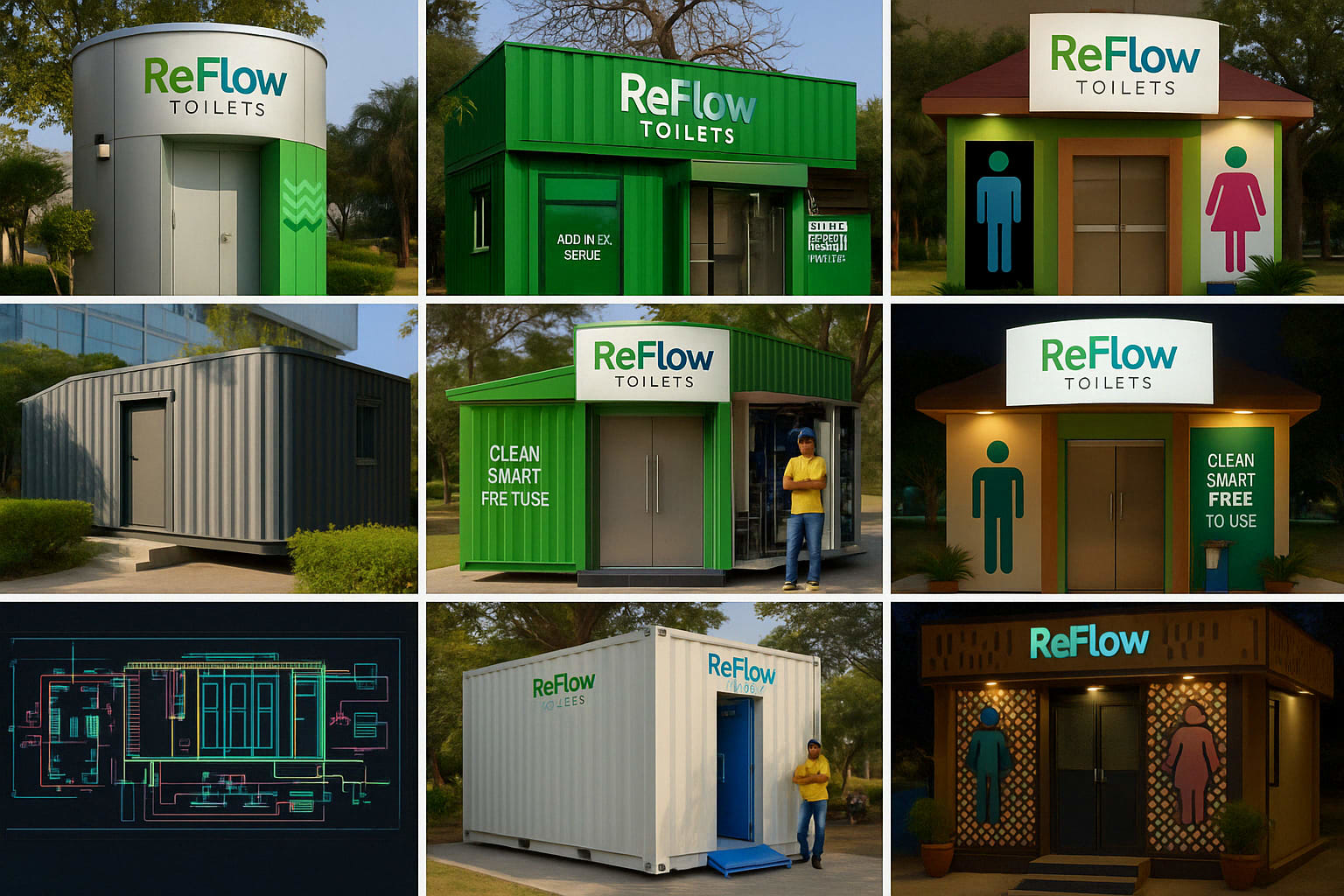
ReFlow's B-CRT (Bio-Circular Resource Technology) integrates these components into a complete zero-discharge system:
Stage 1: Source Separation and Solid-Liquid Separation
The toilet bowl uses a specialized design that separates urine from feces using minimal water (0.3-0.5 liters per flush vs. 6-13 liters for conventional toilets). Solid waste enters a separate processing pathway while liquid waste flows to the MBBR.
A screen separator (1-3mm mesh) removes solid materials, toilet paper, and hygiene products. This protects downstream equipment and concentrates solids for aerobic composting or thermal treatment.
Stage 2: Biological Treatment (MBBR)
The liquid stream undergoes MBBR treatment in a 2-3 stage process:
- Anoxic stage: Denitrification occurs without oxygen
- Aerobic stage: Organic matter oxidation and nitrification
- Polishing stage: Final BOD/COD reduction
Total hydraulic retention time: 12-18 hours for complete treatment.
Stage 3: Clarification and Settling
A settling tank allows remaining suspended solids to separate by gravity. The clear supernatant flows to UV treatment while settled biosolids return to the MBBR or proceed to solids management.
Stage 4: UV Disinfection
The clarified water passes through UV reactors delivering >40 mJ/cm² dose, achieving >99.99% pathogen reduction.
Stage 5: Membrane Filtration
Final UF polishing produces crystal-clear water suitable for toilet flushing, landscape irrigation, or further purification to potable standards.
Stage 6: Solids Management
Separated solids undergo either:
- Aerobic composting: 90+ day process producing pathogen-free compost
- Thermal treatment: Drying/pyrolysis producing biochar and energy
- Anaerobic digestion: Biogas production for energy recovery
Energy and Resource Recovery
Modern zero-discharge systems are net energy producers:
Solar Energy: 2-4 kW solar panels power all treatment processes, pumps, controls, and ventilation.
Biogas Recovery: Anaerobic digestion of solids produces methane-rich biogas (60-70% CH₄), generating 0.3-0.5 m³ biogas per kg of solids. This can offset 30-50% of energy requirements.
Water Recovery: Systems recover 85-95% of input water for reuse, saving 4-8 liters per use compared to conventional toilets.
Nutrient Recovery: Processed solids contain valuable nitrogen (2-4%), phosphorus (1-2%), and potassium (0.5-1%), suitable for agricultural use.
ISO 30500 Compliance
The ISO 30500:2018 standard provides performance requirements for non-sewered sanitation systems. Zero-discharge toilets, recognized by the Gates Foundation and ISO 30500:2018 standards, must meet strict criteria:
Treated Output Quality:
- BOD₅: ≤50 mg/L
- COD: ≤150 mg/L
- Total suspended solids: ≤50 mg/L
- Thermotolerant coliforms: ≤1,000 CFU/100mL
- Helminth eggs: <1 egg/L
Operational Requirements:
- Continuous operation for >95% uptime
- Maintenance intervals >6 months
- Energy consumption <0.5 kWh per user per day
- Water consumption <5 liters per user per day
Environmental Safety:
- No odor emissions beyond 5 meters
- No groundwater contamination
- Safe solids management pathway
- <50 dB(A) noise levels
ISO 30500 certification requires rigorous third-party testing over 12+ months of continuous operation. ReFlow's B-CRT systems achieve compliance with margins exceeding 30-40% for all parameters.
Real-World Performance Data
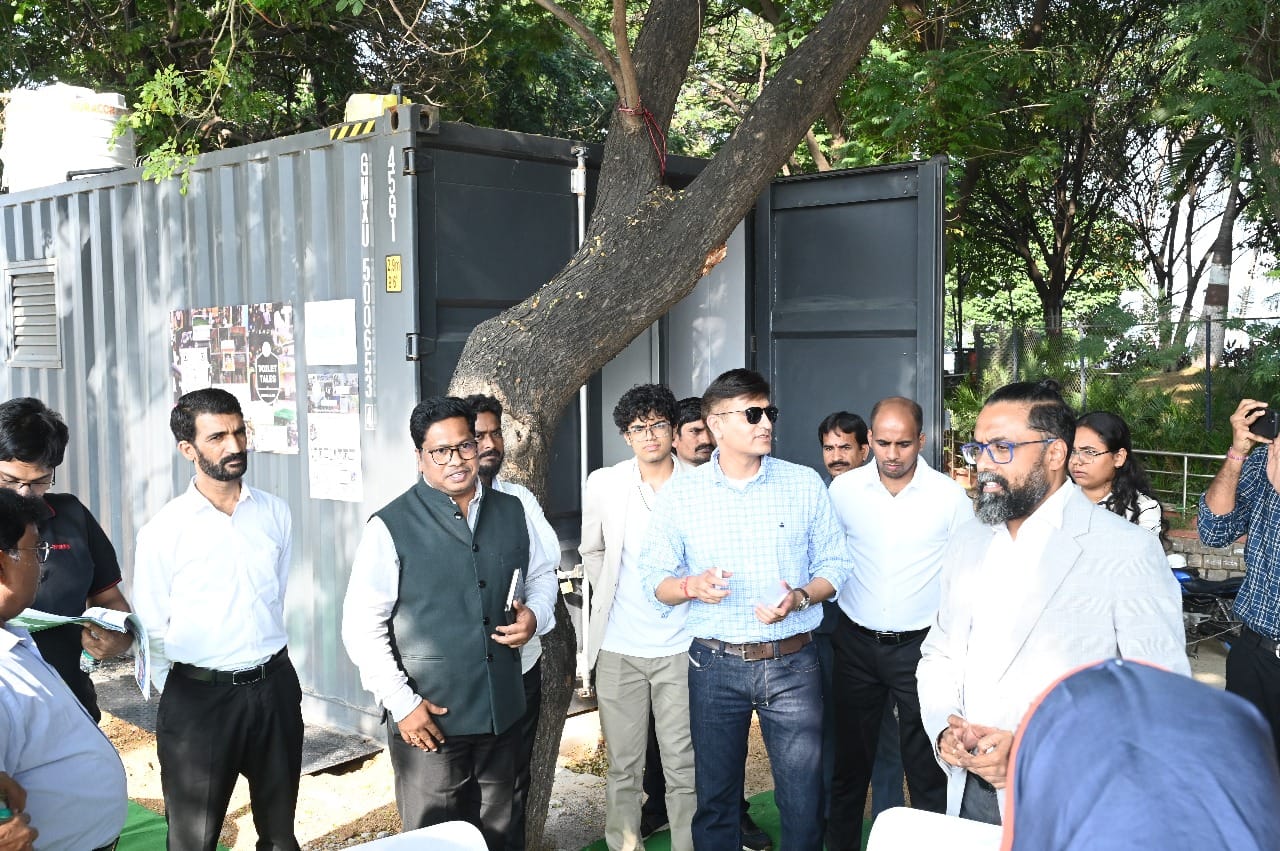
Hyderabad Deployment (2022-2024):
- 15 B-CRT units installed across GHMC area
- Average daily users per unit: 350-500
- Water quality consistently below ISO limits:
- BOD₅: 18-35 mg/L (limit: 50)
- Coliforms: 100-500 CFU/100mL (limit: 1,000)
- TSS: 8-22 mg/L (limit: 50)
- Uptime: 97.3% over 18 months
- Energy self-sufficiency: 92% (solar + biogas)
Cost Performance:
- Capital cost: ₹12-18 lakhs per unit
- Operating cost: ₹800-1,200 per day (vs. ₹2,000-3,000 for traditional)
- Water savings: 1.8 million liters per year per unit
- Payback period: 4-6 years through reduced water and maintenance costs
Conclusion
Zero-discharge toilet technology represents a paradigm shift in sanitation, transforming waste from an environmental problem into a resource recovery opportunity. By integrating proven technologies—MBBR, UV disinfection, membrane filtration—into compact, solar-powered systems, we can provide safe, sustainable sanitation without the prohibitive costs of centralized sewerage.
As climate change intensifies water scarcity and urbanization accelerates, zero-discharge systems will become increasingly essential. The technology is mature, field-proven, and cost-competitive. The question is no longer whether zero-discharge toilets work, but how quickly we can scale deployment to serve the billions who need them.
Related Resources:
- ISO 30500 Certification Explained
- Public Toilet Economics: Why Traditional Models Fail
- Explore B-CRT Technology
References:
- WHO/UNICEF Joint Monitoring Programme (2021). Progress on household drinking water, sanitation and hygiene 2000-2020.
- Bill & Melinda Gates Foundation (2018). Reinvent the Toilet Challenge: Progress Report.
- ISO 30500:2018 - Non-sewered sanitation systems — Prefabricated integrated treatment units — General safety and performance requirements for design and testing.
- Ruiken, C.J., et al. (2013). "Sieving wastewater – Cellulose recovery, economic and energy evaluation." Water Research 47(1): 43-48.
- McQuarrie, J.P. and Boltz, J.P. (2011). "Moving bed biofilm reactor technology: Process applications, design, and performance." Water Environment Research 83(6): 560-575.