Public Toilet Economics: Why Traditional Models Fail
Public toilets are essential urban infrastructure, yet they remain chronically underfunded, poorly maintained, and inaccessible in most cities worldwide. Despite billions spent annually on sanitation, traditional public toilet models consistently fail to deliver adequate service. This failure isn't due to lack of investment—it's a fundamental economic problem with conventional sewered sanitation approaches.
The True Cost of Traditional Public Toilets
Capital Expenditure
Building a single conventional public toilet block connected to municipal sewerage requires:
Construction Costs (Urban India, 2024):
- Building structure: ₹15-25 lakhs ($18,000-$30,000)
- Plumbing and fixtures: ₹3-5 lakhs ($3,600-$6,000)
- Sewerage connection: ₹2-8 lakhs ($2,400-$9,600)
- Water connection: ₹1-3 lakhs ($1,200-$3,600)
- Electrical and lighting: ₹2-4 lakhs ($2,400-$4,800)
- Land acquisition/site preparation: ₹5-15 lakhs ($6,000-$18,000)
Total capital cost: ₹28-60 lakhs ($34,000-$72,000) per facility
This assumes existing sewerage infrastructure. In areas without sewers, costs escalate dramatically:
Sewerage Infrastructure (per kilometer):
- Excavation and pipe laying: ₹40-80 lakhs/km
- Pumping stations (every 2-5 km): ₹25-50 lakhs each
- Treatment plant connection: ₹100-200 lakhs (proportional allocation)
For a public toilet 500 meters from the nearest sewer line, infrastructure costs add ₹20-40 lakhs, nearly doubling total project cost.
Operational Expenditure
Capital costs are just the beginning. Traditional public toilets incur substantial ongoing expenses:
Monthly Operating Costs (per facility):
- Water consumption: ₹15,000-30,000
- 200-400 users/day × 15-20 liters/use = 3,000-8,000 liters/day
- At ₹15-25 per kiloliter, plus sewage charges
- Cleaning staff (2-3 full-time): ₹35,000-55,000
- ₹12,000-18,000 per staff member (including benefits)
- Maintenance and repairs: ₹8,000-15,000
- Plumbing repairs, fixture replacement, vandalism damage
- Electricity: ₹5,000-10,000
- Lighting, ventilation, water pumps
- Consumables: ₹6,000-10,000
- Soap, sanitizer, toilet paper, cleaning supplies
- Security/management: ₹10,000-20,000
Total monthly operating cost: ₹79,000-140,000 ($950-$1,680)
Annual operating cost: ₹9.5-16.8 lakhs ($11,400-$20,160)
Over a 20-year facility lifespan, operating costs reach ₹1.9-3.4 crores ($228,000-$408,000)—often exceeding the initial capital investment by 3-6x.
Hidden Costs
Traditional models incur additional costs rarely included in official budgets:
Sewerage System Maintenance:
- Blockages and repairs: ₹50,000-200,000 per incident
- Pumping station operation: ₹2-4 lakhs/year per station
- Treatment plant operations: ₹0.50-1.50 per cubic meter treated
Environmental and Health Costs:
- Groundwater contamination from leaking sewers: Estimated ₹10-50 lakhs/year in affected areas
- Disease burden from inadequate sanitation: WHO estimates $260 per person annually
- Lost productivity from illness: ₹5-15 lakhs/year per 1,000 population served
Social Costs:
- Women's safety concerns limiting access
- Open defecation due to facility unavailability
- Loss of dignity and gender equality
- Economic impact on informal sector workers without toilet access
Why Traditional Models Fail
1. Unsustainable Economics
The fundamental issue: revenue cannot cover costs.
Most public toilets charge ₹2-5 per use. With 200-400 users daily:
- Daily revenue: ₹400-2,000
- Monthly revenue: ₹12,000-60,000
This covers only 9-43% of operating costs, creating a permanent funding gap requiring government subsidy.
Municipal budgets cannot sustain this. The Central Public Health and Environmental Engineering Organisation (CPHEEO) estimates India needs 500,000 public toilets—requiring ₹475-795 crores in annual operating subsidies. Most municipalities allocate <10% of this amount.
2. Maintenance Collapse
Insufficient funding leads to maintenance deferral. A typical deterioration cycle:
Year 1-2: New facility, regular cleaning, good condition
Year 3-5: Cleaning frequency decreases, minor repairs delayed
Year 5-10: Significant deterioration, fixtures broken, odor issues
Year 10+: Facility unusable, often abandoned
A 2019 study of 1,200 public toilets across 12 Indian cities found:
- 38% in poor condition
- 24% non-functional
- Only 15% maintained to acceptable standards
3. Water Dependency
Traditional flush toilets require 6-13 liters per flush. For a 300-user facility:
- Daily water consumption: 1,800-3,900 liters
- Annual consumption: 657,000-1,423,500 liters
In water-scarce regions, this is unsustainable. Many facilities reduce flush volume or frequency, degrading hygiene. Others face water supply interruptions, rendering them unusable.
4. Sewerage Dependence
Only 37% of Indian urban areas have sewerage coverage. In uncovered areas, public toilets rely on:
Septic tanks: Require emptying every 6-18 months at ₹8,000-15,000 per event. Often overflow or leach into groundwater.
Pit latrines: Fill within 2-5 years, requiring costly pit emptying or new pit construction.
Illegal discharge: Some facilities discharge untreated waste into storm drains or water bodies, creating environmental and health hazards.
5. Centralized Vulnerability
Sewered systems depend on:
- Continuous water supply
- Electrical power for pumping
- Functioning treatment plants
- Maintained pipeline network
Failure of any component renders the entire system non-functional. During floods, power outages, or infrastructure damage, centralized systems often fail completely.
Real-World Failure Data
Mumbai Municipal Corporation (2018-2023)
Investment: ₹450 crores for 1,200 public toilets
Outcomes:
- 315 toilets (26%) non-functional within 3 years
- Average maintenance cost exceeded projections by 240%
- User satisfaction: 2.1/5 rating
- Only 18% of toilets accessible to persons with disabilities
- 67% of women reported safety concerns
Delhi Urban Development Authority (2015-2022)
Investment: ₹280 crores for 850 toilet blocks
Outcomes:
- 192 blocks (23%) closed due to maintenance failures
- Water bills exceeded budget by ₹34 crores over 7 years
- Cleaning staff turnover: 78% annually
- 41% of facilities reported frequent sewage backup
- Actual usage 30-50% below capacity due to poor conditions
Bengaluru Municipality (2017-2024)
Investment: ₹320 crores for 1,000 toilets
Outcomes:
- Operating deficit: ₹89 crores over 7 years
- 28% of facilities vandalized or damaged
- Water consumption 180% above estimates
- 52% fail basic hygiene standards
- Revenue collection only 12% of costs
The Alternative: Decentralized Zero-Discharge Systems
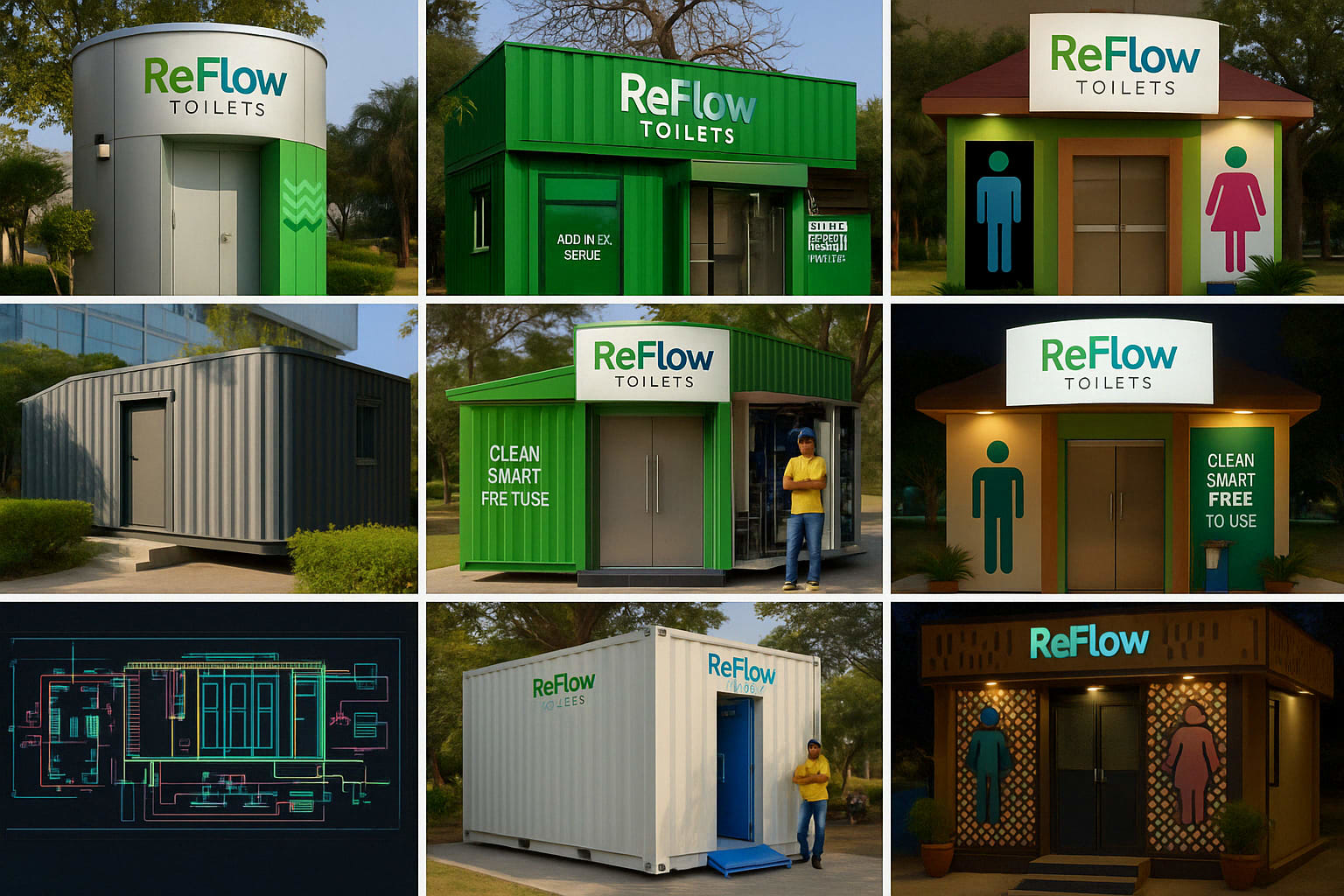
Zero-discharge toilets, recognized by the Gates Foundation and ISO 30500:2018 standards, (like ReFlow's B-CRT) fundamentally change the economics:
Capital Cost Comparison
Decentralized System (B-CRT):
- Fully integrated unit: ₹12-18 lakhs
- Site preparation: ₹2-4 lakhs
- No sewerage connection required: ₹0
- No water infrastructure required: ₹0
- Solar power installation: ₹3-5 lakhs (included in unit cost)
Total capital cost: ₹14-22 lakhs vs. ₹28-60 lakhs for traditional
Savings: 40-63% on capital expenditure
Operating Cost Comparison
Monthly Operating Costs (B-CRT):
- Water consumption: ₹0 (recycled)
- Cleaning staff: ₹35,000-55,000 (same)
- Maintenance: ₹5,000-8,000 (lower complexity)
- Electricity: ₹0 (solar-powered)
- Consumables: ₹6,000-10,000 (same)
- Security/management: ₹10,000-20,000 (same)
Total monthly operating cost: ₹56,000-93,000
Annual operating cost: ₹6.7-11.2 lakhs
Savings: 29-33% on operating expenses
20-Year Total Cost of Ownership
Traditional Model:
- Capital: ₹44 lakhs (average)
- Operations (20 years): ₹2.6 crores
- Major repairs (2-3 cycles): ₹15 lakhs
- Total: ₹2.9 crores
Zero-Discharge Model:
- Capital: ₹18 lakhs (average)
- Operations (20 years): ₹1.8 crores
- Major repairs (1-2 cycles): ₹8 lakhs
- Total: ₹2.0 crores
Total lifecycle savings: ₹90 lakhs per facility (31%)
For a city deploying 100 public toilets, this represents ₹90 crores in savings—enough to build 50 additional facilities.
Additional Economic Benefits
Water Savings
B-CRT systems recycle 90% of water, saving:
- 657,000-1,423,500 liters annually per facility
- At ₹15-25 per kiloliter: ₹9,855-35,588 per year
- 100 facilities: ₹9.9-35.6 lakhs annual savings
Over 20 years: ₹1.98-7.12 crores in avoided water costs.
Environmental Savings
Zero discharge eliminates:
- Sewage treatment costs: ₹0.50-1.50 per cubic meter
- For 657,000 liters/year: ₹3,285-9,855 per facility
- 100 facilities: ₹32.85-98.55 lakhs annually
Energy Independence
Solar power eliminates grid dependency and costs:
- Typical electricity cost: ₹60,000-1,20,000 annually
- 20-year savings: ₹12-24 lakhs per facility
- 100 facilities: ₹12-24 crores total
Revenue Potential
Better maintained facilities can charge premium rates:
- Standard charge: ₹5 per use
- 350 users/day × ₹5 = ₹1,750/day
- Monthly revenue: ₹52,500
- Annual revenue: ₹6.3 lakhs
At ₹10/use for premium facilities:
- Annual revenue: ₹12.6 lakhs
- Can cover 100%+ of operating costs
Policy Implications
The economics clearly favor decentralized solutions, yet most governments continue investing in traditional sewered systems. Why?
Institutional Inertia
Water and sewerage departments have expertise and budgets tied to centralized infrastructure. Decentralized systems threaten departmental budgets and authority.
Procurement Barriers
Government procurement favors lowest initial bid, ignoring lifecycle costs. A traditional toilet may win bids at ₹30 lakhs vs. ₹35 lakhs for a superior decentralized system, despite the traditional system costing ₹50 lakhs more over its lifetime.
Knowledge Gaps
Many officials lack familiarity with modern decentralized technologies. Training and awareness programs are essential.
Split Incentives
Capital budgets (construction) and operating budgets (maintenance) are separate. Departments maximize construction to show "progress" while operating budgets remain inadequate.
Recommendations for Municipalities
- Adopt lifecycle cost analysis in all procurement decisions
- Pilot decentralized systems in unsewered areas before extending sewerage
- Implement performance-based contracts with private operators
- Create dedicated sanitation funds combining capital and operating budgets
- Mandate ISO 30500 certification for all new public toilet deployments
- Establish user fee structures that recover 50-100% of operating costs
- Provide transparency with public dashboards showing facility conditions
Conclusion
The economics of public toilets are clear: traditional sewered models are financially unsustainable, environmentally damaging, and operationally fragile. Decentralized zero-discharge systems offer 30-60% cost savings while delivering superior performance, environmental benefits, and resilience.
The question isn't whether cities can afford to switch to decentralized sanitation—it's whether they can afford not to.
Related Resources:
- How Zero-Discharge Toilets Work
- Case Study: How Hyderabad Saved ₹2.1Cr
- Request a Cost Analysis for Your Municipality
References:
- CPHEEO (2022). "Status of Urban Sanitation Infrastructure in India."
- World Bank (2019). "The Economics of Sanitation in India."
- WHO (2018). "Guidelines on Sanitation and Health."
- Indian Institute of Human Settlements (2021). "Urban Sanitation: Costs and Performance."
- ReFlow Toilets internal deployment data (2022-2024).